Background & Goal
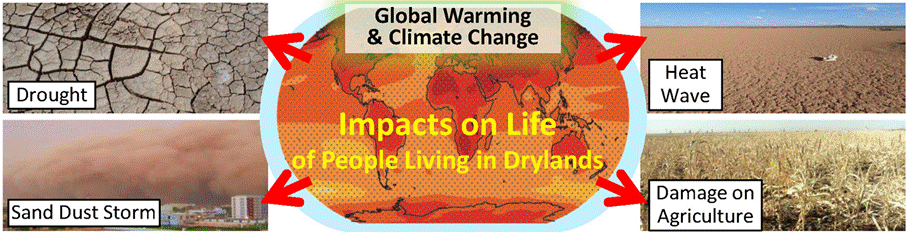
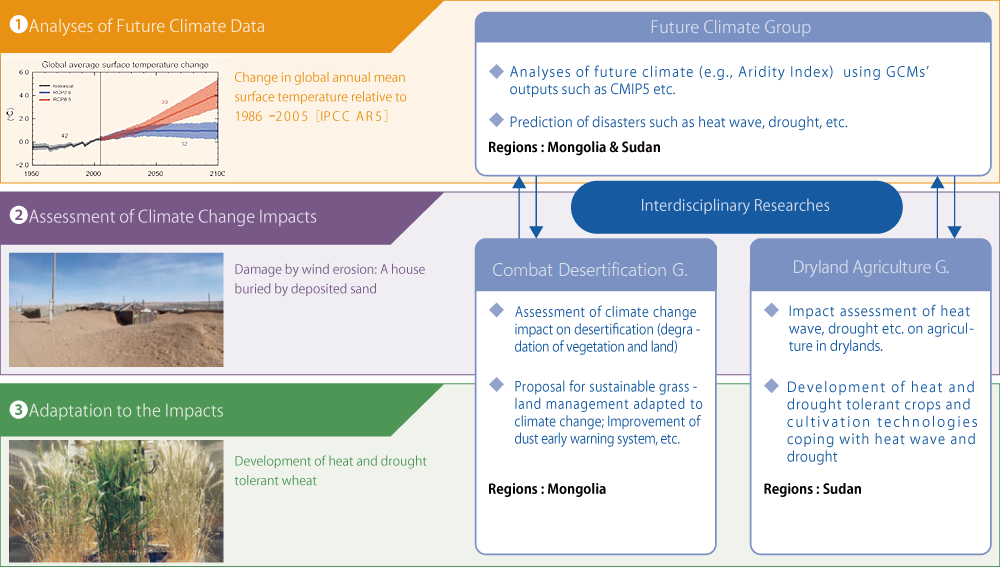
It is pointed out that global warming increases the frequency of extreme weather events. Disasters such as heat wave, drought etc. frequently occur in drylands as well, and they have impacts like food scarcity. In the project, we will conduct (1) analyses of future climate, (2) assessments of climate change impacts on desertification and agriculture, and (3) developments of adaptation technologies against its impacts in drylands by three groups: Future Climate Group (FCG), Combat Desertification Group (CDG), and Dryland Agriculture Group (DAG). In the project, FCG will carry out analyses of heat wave, drought and so on with climate data, which are used for researches in connection with climate change including the IPCC reports, and FCG will provide the analysis results to CDG and DAG. Based on the results, CDG will make assessments of climate change impact on desertification (i.e., degradation of vegetation and land) around Mongolia, and it will also make a proposal of sustainable grassland management adapted to climate change, improvement of dust early warning system, etc. DAG will make assessments of climate change impact on agriculture around Sudan, and it develops heat and drought tolerant crops and cultivation technologies to cope with heat wave and drought.
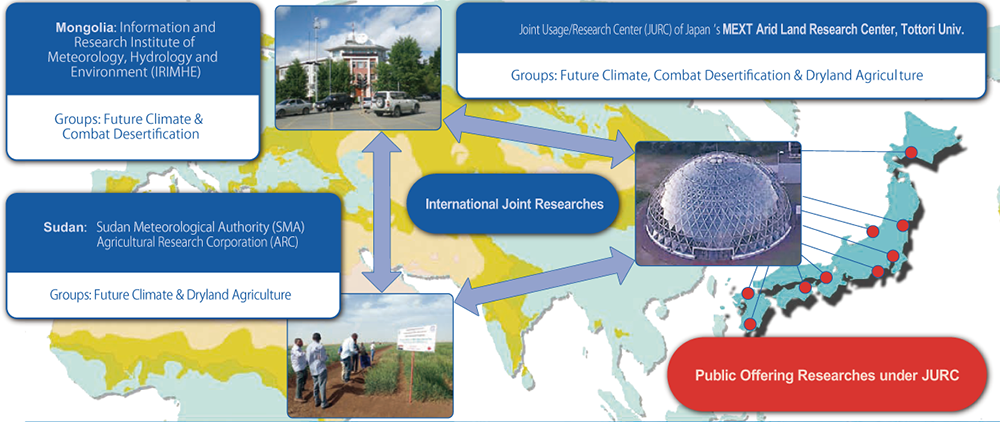
Overseas Collaborative Organizations
We promote collaborative researches with Information and Research Institute of Meteorology, Hydrology and Environment (IRIMHE, Mongolia) , Agricultural Research Corporation (ARC, Sudan), and Sudan Meteological Authority(SMA, Sudan).
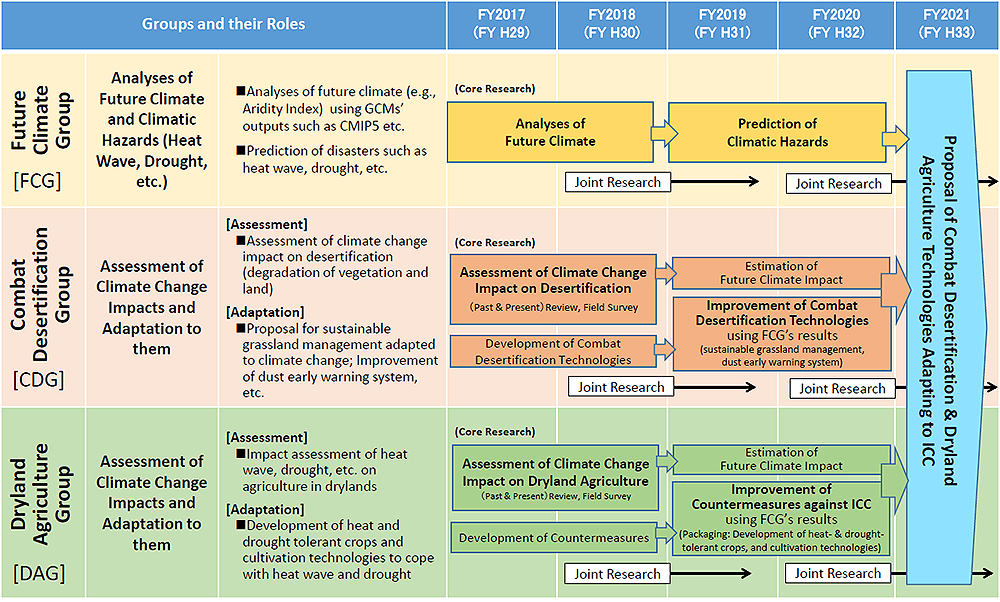
Schedule
Expected Achievements
◎Academic Effect:
Assessment of climate change impacts on drylands, and development of adaptation technologies (e.g., heat tolerant crop)
◎Social Impact Effect:
Contribution to UNCCD; Sustainable development in drylands; Food security; Mitigation of damages from sand-dust storm, etc.
◎Improvement Effect:
Improvement of adaptation technologies developed in Tottori University; Promotion of interdisciplinary and international joint researches.
